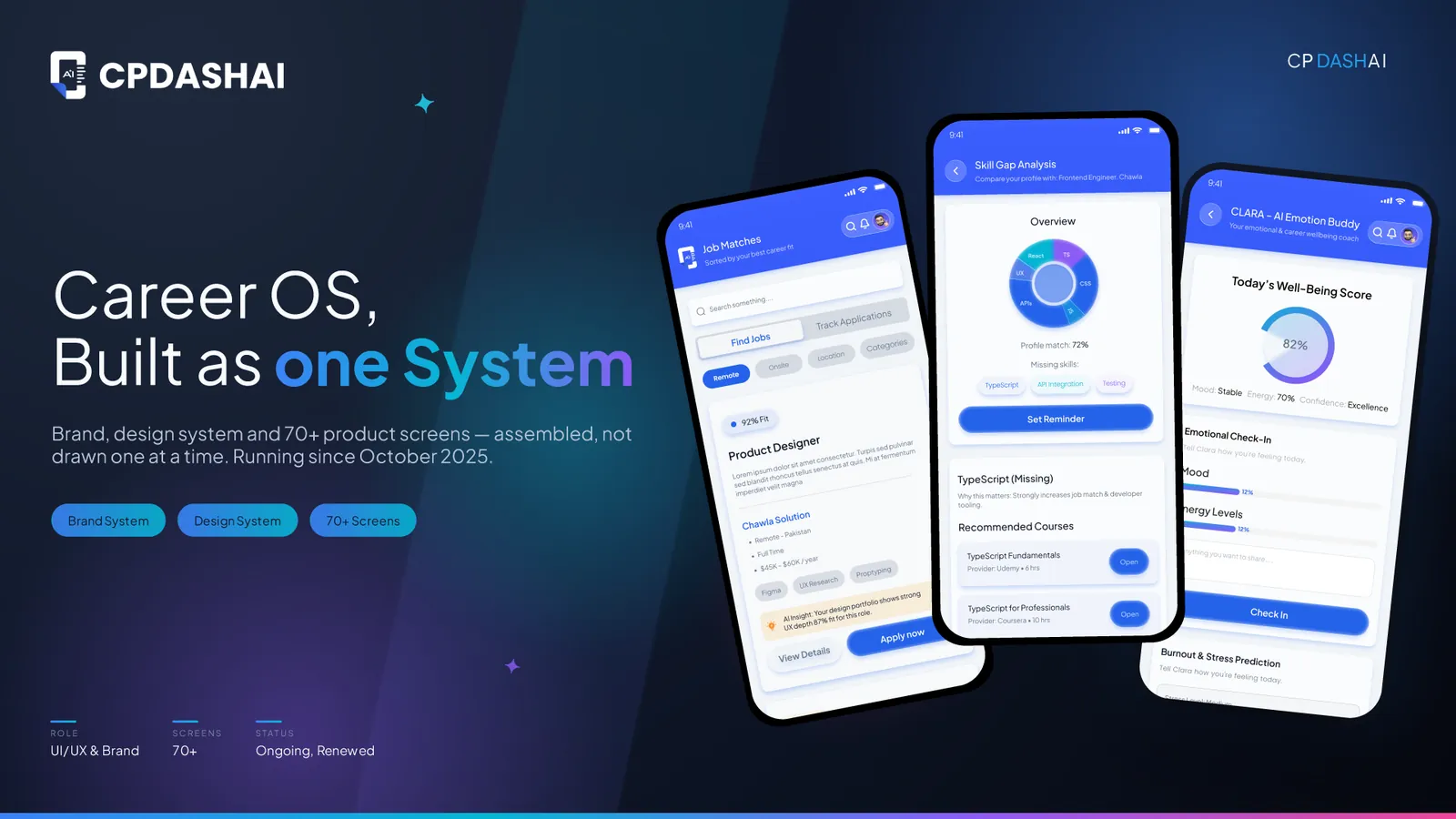
70+ screens assembled from one reusable system, and still running
Running since October 2025started as a small piece of work and the scope has grown with it
One brand, one interfacethe brand came first, and the product was built directly onto it
A system, not a screen countbuilt to be reused, so screens are assembled rather than drawn one at a time
70+ screenswhich is what a reusable system is for. The number is a consequence, not the job
CASE01
What they came with
cpdash.ai had a growing product with no locked visual direction — no defined brand, and a growing list of screens with no shared system to hold them together.
Two problems rather than one, and they had to be solved in that order. The brand needed defining first, and the interface needed building on top of whatever the brand turned out to be. Doing them the other way round is how a product ends up looking like one thing and its brand like another.
CASE02
How I built it
The brand came first, and I built the interface directly on it, so the product and the brand could not drift apart. From there, every screen was built onto a system meant to be reused, not drawn one at a time.
The brand, and the interface built on top of it.
That distinction is the whole of it. Seventy screens drawn one at a time is seventy decisions about spacing, seventy about type, seventy chances for two of them to disagree. Seventy screens assembled from a system is one set of decisions, applied, and the seventy-first costs almost nothing.
Components first. The screens are assembled from these.
Done solo, which is why the system mattered more than it might have on a team: there was nobody to keep in step with, and equally nobody to catch a screen that had drifted.
CASE03
What shipped
A brand identity, a design system, and the product interface built from both: 70+ screens assembled from the same components and type scale.
Screens, assembled rather than drawn.
The engagement began as a small piece of work and has grown with the product. It is still running.
Ten seconds of the same argument: the components first, then the seventy screens that came out of them.
CASE04
Where it landed
The engagement is ongoing, and what it has produced commercially is not something this page can claim yet.
What can be said is what the work was for: a product that could be extended without being redesigned. Seventy-plus screens exist because the system makes the next one cheap, and that is the thing being tested every time the scope grows again, which it has, repeatedly, since October.
The client renewed rather than closed, and left a five-star review against the project while it was still running.
This conversation is recorded and shared with Hamza Ashraf so he can follow up personally.
Ask me about Hamza's services, pricing, process or past work. I answer from what is on this site. For anything that needs a decision, I will point you to him.
Answers come from this site. For a quote or a start date, message Hamza.


 cpdash.aiView on Freelancer.com